What Are Exchange Traded Funds (ETFs)?
If you are learning about investing, you may come across the term ETF, which stands for Exchange-Traded Fund. ETFs have become one of the most popular investment tools because they are simple, flexible, and relatively low-cost. This article explains what ETFs are, how they work, and why many investors use them.
What is an ETF?
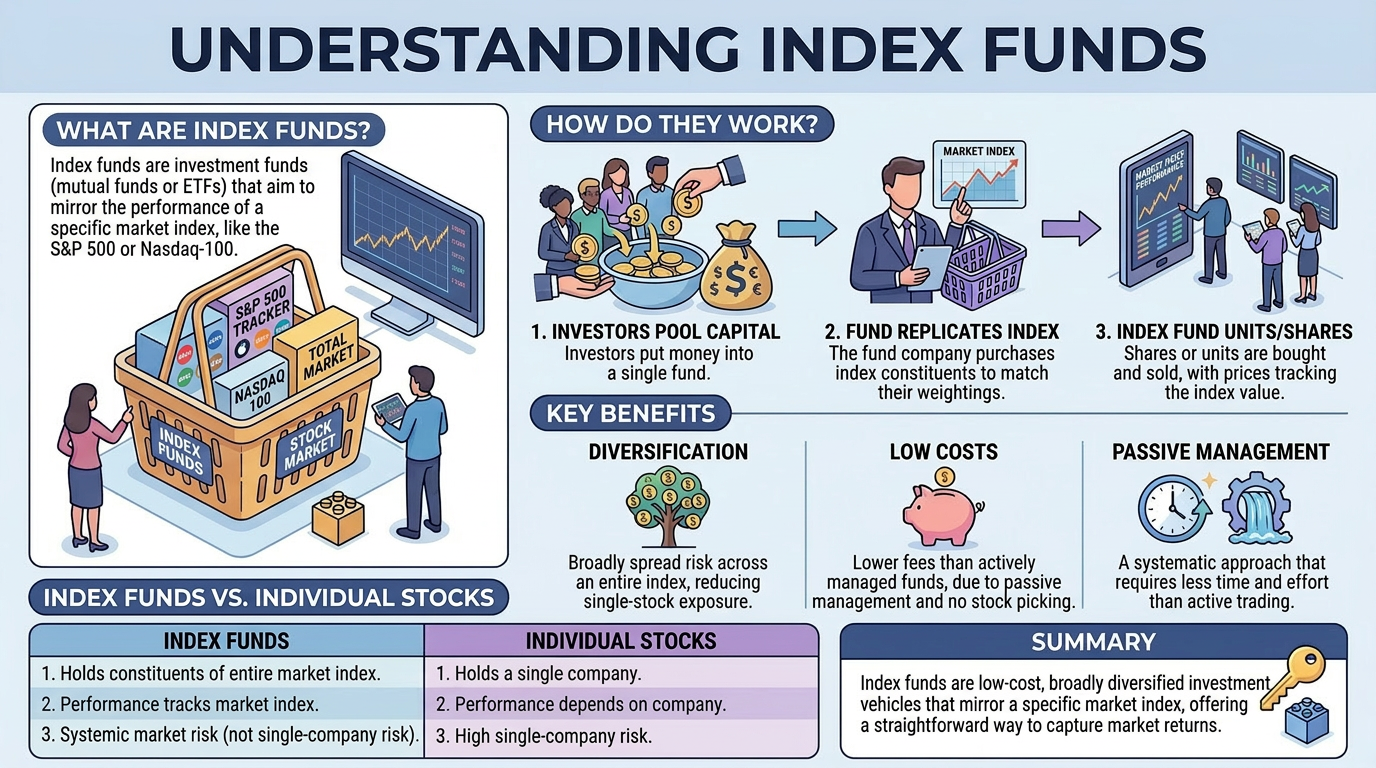
An ETF (Exchange-Traded Fund) is a type of investment fund that holds a collection of assets such as stocks, bonds, or other securities. Instead of buying each investment individually, you can buy a single ETF that contains many different investments.
In many ways, ETFs are similar to index funds because they often track a specific index. For example, some ETFs track the S&P 500 by holding the same companies that make up that index. However, ETFs are traded on stock exchanges, just like individual stocks. This means you can buy and sell them throughout the day while the stock market is open.
How Do ETFs Work?
When you buy a share of an ETF, you are buying a small piece of the entire fund. The company that manages the ETF uses the money from investors to purchase the assets that the fund is designed to track. For example, an ETF that tracks the S&P 500 will own shares of many companies in that index. When the value of those companies goes up or down, the value of the ETF changes as well. Because ETFs hold many different investments, they allow investors to gain exposure to a wide range of companies or assets with just one purchase.
ETFs vs Individual Stocks
One key difference between ETFs and individual stocks is diversification. When you buy a single stock, your investment depends entirely on how that one company performs. If the company does poorly, your investment could lose a lot of value very quickly. With an ETF, your money is spread across many companies or assets. This reduces the risk that one company performing badly will significantly affect your investment.
Summary
ETFs are investment funds that hold a collection of assets such as stocks or bonds and trade on stock exchanges like individual stocks. They allow investors to buy many investments at once, making diversification simple and convenient. Because they are flexible, low-cost, and easy to access, ETFs have become one of the most widely used investment tools for both beginner and experienced investors. For many people, ETFs provide a straightforward way to build a diversified investment portfolio.
