A Simple Guide to The Bond Market
When we hear about financial trading, the image that immediately comes to mind is the stock market, with its ticker tapes and fluctuating company values. However, there is a much larger, incredibly active marketplace operating right alongside it: the bond market. While the stock market is a place where people buy and sell tiny pieces of ownership in a company, the bond market is a place where people buy and sell loans.
The First Step and Creating New Loans
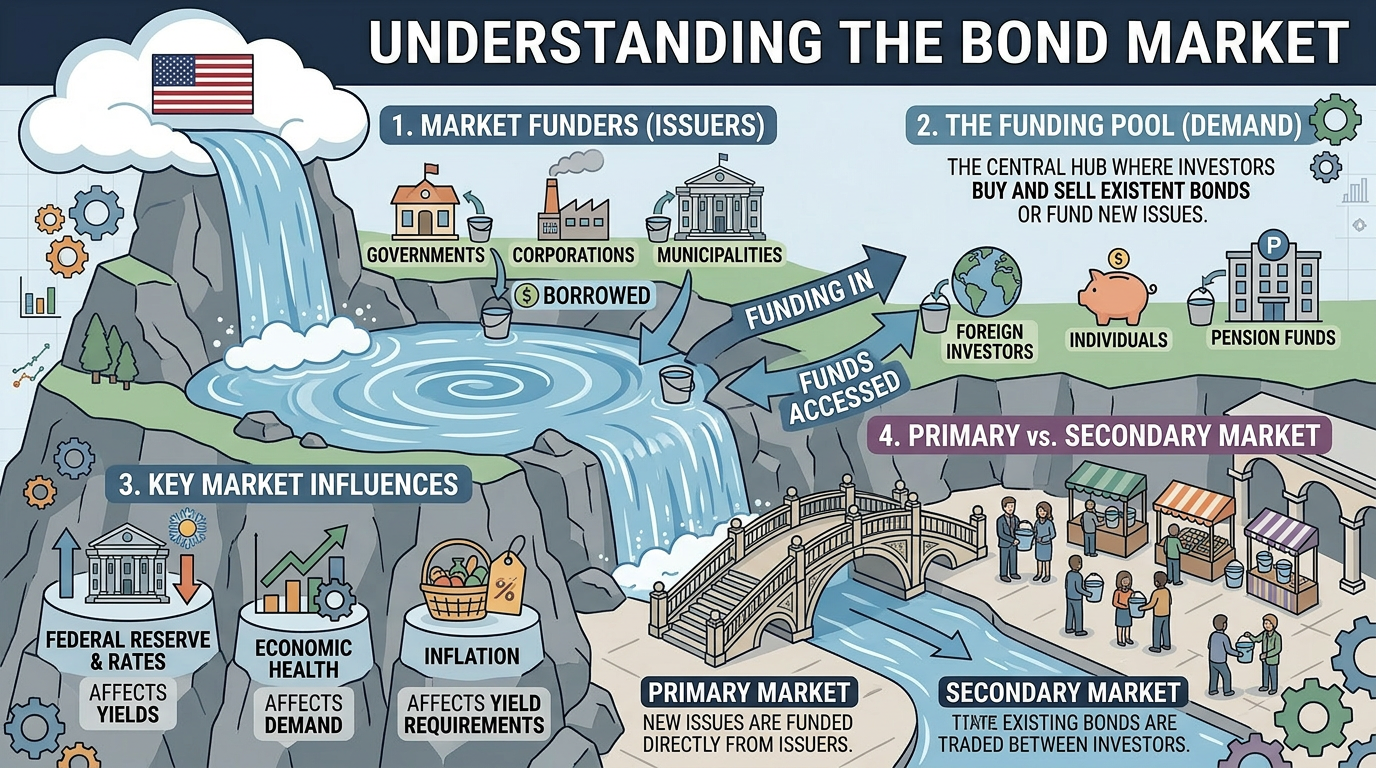
Before a loan can be traded, it has to be created. This happens when a major organization, like a city government, the federal government, or a large corporation, needs a massive amount of cash to build a bridge or open a new factory. Instead of going to a single bank, they issue brand-new bonds to the public.
In this initial phase, an investor buys the new bond directly from the organization. The investor hands over their cash, and the organization promises to pay that exact amount back on a specific future date, along with a schedule of steady interest payments. At this stage, it is a straightforward agreement between the borrower and the lender.
The Trading Floor for Existing Loans
The reality of investing is that people's financial needs change. Many bonds are designed to last for ten, twenty, or even thirty years. If an investor lends money to a company for thirty years but suddenly needs cash to buy a house after only five years, they cannot simply ask the company for a refund. Instead, they take that bond to the open marketplace and sell it to another investor.
This is where the bond market truly functions like a stock exchange. Every day, millions of existing bonds are bought and sold between investors. When a bond is sold, the original borrowing organization is not involved in the transaction at all. They simply update their records and start sending those scheduled interest payments to the brand-new owner.
The Invisible Forces Pushing Prices Up and Down
In the stock market, the price of a share usually goes up if a company announces record profits or releases a popular new product. In the bond market, prices are driven by an entirely different force: national interest rates.
Because bonds are constantly being traded, their prices shift up and down like a seesaw depending on what new loans are offering. Imagine you are trying to sell an old bond that pays a 3% interest rate. If the national economy changes and brand-new bonds are suddenly offering a 5% return, your older bond looks very unappealing to buyers. To convince another investor to take your old bond, you have to drop your asking price and sell it at a discount (a lower price).
Conversely, if the national economy changes and new bonds are only offering a 1% return, your older bond that pays 3% suddenly becomes a highly valuable prize. Investors will gladly pay a premium price above its original value just to get their hands on those higher, locked-in interest payments. This constant balancing act is what keeps the bond market moving all day long.
The Heavyweights of the Financial World
While everyday people certainly buy and sell individual bonds, this specific marketplace is largely dominated by financial heavyweights. Because bonds offer a predictable, scheduled return, they are favored by massive institutions that need a safe place to park huge amounts of cash.
Insurance companies, retirement pension funds, and even foreign governments trade in this market constantly. Rather than trading a few hundred dollars at a time, these organizations trade blocks of bonds worth millions or billions of dollars. Because the players are so large and the amounts of money are so vast, the bond market is actually significantly larger in total value than the global stock market.
Summary
The bond market is a massive, active trading floor where existing loans are constantly bought and sold between investors. After a government or corporation issues a new bond to get the cash they need, those bonds take on a life of their own in the open marketplace. Driven by the seesaw effect of national interest rates, the prices of these loans fluctuate daily as massive financial institutions trade them back and forth. By providing a space for investors to securely trade their loans, this market ensures that cash is always flowing to where it is needed most in the global economy.
